3 Şubat 2011 Perşembe

Offline, meet online: a marketing experiment with Google Goggles

About a year ago, we launched Google Goggles, an app that enables people to search the web by taking pictures with their mobile devices. Since then, people have used Goggles to search for information about lots of different things: famous paintings, landmarks, products and much more.

Today, we?re announcing a Google Goggles marketing experiment. We?re working with five brands?Buick, Disney, Diageo, T-Mobile and Delta Air Lines?to extend some of their offline marketing to the mobile web. They have ?Goggles-enabled? some of their print ads, movie posters and other media. When users take pictures of these with Google Goggles, they will be recognized by the app, and users will have the option of clicking-through directly to a mobile destination from the brand.

For a closer look at these specific campaigns, take a look at our video:


We developed Google Goggles so that people could more easily explore the world around them with a mobile device. In this experiment, we?re applying the same principles, and the same technology, by ?Goggles-enabling? advertisements and other media, and offering to link people to the mobile sites from these brands.

When you scan this "Goggles-enabled" Buick ad with Google Goggles, you can connect directly with Buick's mobile experience. Click the image to enlarge.

To interact with these experimental campaigns, download Google Goggles from the Android Market or get Google Mobile App for iPhone from the iTunes store, and look for advertising and products from companies in the video above and others that are coming soon.


online advertising plan |marketing websites |online advertising companies |online business advertising |online advertising solutions |

Editing your Google Docs on the go

(Cross-posted on the Google Docs Blog, Google Enterprise Blog and the Google Mobile Blog)

With Google Docs, we?re always trying to make you more productive?and part of that means making it possible for you to get things done from anywhere, at anytime. That?s why we?re excited that the new documents editor now supports editing on your mobile browser. We?re rolling this out over the next few days.

That means that...
  • You can work on that important memo...while on the bus or train to work.
  • If you?re behind on a group proposal, but really want to make it to the ball game tonight, your whole team can work on it from the bleacher seats.
  • You can take minute-by-minute notes at a concert so you?ll always remember the setlist. And your friends can jealously follow in real-time at home.
  • ...and the list goes on!
Take a look at this video to see mobile editing in action:


It?s easy to get started: visit docs.google.com in a browser on a supported device, and select the document you want to edit. Then, when you?re viewing it, press the Edit button to switch to the mobile editor.


In the next few days, we?re rolling this out to English-language users around the world on Android with Froyo (version 2.2) and on iOS devices (version 3.0+) including the iPad. We?ll be adding support for other languages soon. And as before, we also support editing of spreadsheets from your mobile device?s browser.

We hope you enjoy editing your documents on the go?especially when you?re at the game with a hot dog in your other hand.


online marketing solutions |internet advertising agency |advertising network |online advertising trends |online advertising sales |

Improvements to Product Search for this holiday season

Every year retailers start the holiday shopping season earlier and earlier?and still I procrastinate until late December before getting started. This year I've already made my list and I?m ready to go.

I usually get my holiday shopping done in two ways: online (e-commerce) and offline (?brick and mortar? stores). I?ve found that shopping online is best when you know what you're looking for?you can search for specific items, research multiple brands or compare reviews. On the other hand, shopping offline makes it easier to explore products in person and sometimes discover things that you didn?t know existed. Plus, it?s usually the only way to take your purchase home the same day.

The line between online and offline shopping is starting to blur: According to a study by Forrester while 93 percent of retail purchases today happen in a store, more than 46 percent of those in-store purchases are influenced by online research. Not to mention that shoppers can access the web from anywhere at anytime?including from their mobile phones when browsing the aisles of a local store.

All of this got our team thinking about how we could help further bridge the gap between online and offline shopping. This week, we?re introducing several new features to Product Search that start doing just that.

Local availability on Google Product Search: We?ve partnered with more than 70 retail brands?including national retailers like Best Buy and Williams-Sonoma, as well as software manufacturers like JDA, Epicor and Oracle?to connect shoppers searching online with local stores that have the items they?re are looking for in-stock. For example, if you?re looking online to get your son that new Wii video game he?s been wanting, you can click on the ?nearby stores? link to see where it?s in stock nearby. (If you?re a retailer who?s interested in taking part, you can learn more on the Google Retail Blog.)


Local Availability in Google Product Search
Google Shopper 1.3: Our mobile shopping app helps shoppers on the go research items and find the best place to buy them either online or in a nearby store?and it already has more than 2.5 million downloads. This version includes new search filters like ?price? and ?brand? to help refine your search. And, you?ll still get features like Local Availability, voice search and rapid continuous barcode scanning (so you can point your phone at a product and get information from the web).

?Popular products? and ?aisles?: We?ve borrowed an idea from successful brick and mortar stores and in the coming weeks, we'll roll-out two features called ?popular products? and ?aisles? to help people learn about and discover new products. When you search for a category of products such as ?camera lenses,? our new popular products feature helps you get started by showing you the lenses other people are viewing online. ?Aisles? helps you browse and discover products by organizing results into sub-categories that others have found helpful. For example, if you?re looking for a new TV, you can choose between display types like LCD and plasma. If you?re interested in camera lenses for that brand new SLR, you can shop by the aperture of the lens.

Aisles and Popular Products
We hope these features make it easier for you to get your shopping done this holiday season?whether it?s online, offline or in the new space in between.

Happy shopping!


benefits of online advertising |online advertisers |banner advertising |online advertising tool |online advertising sales |

This week in search 11/12/10

This is one of a regular series of posts on search experience updates. Look for the label This week in search and subscribe to the series. - Ed.

We?re always excited by the diversity of the search features and enhancements that we make in any given week. Each week we try to release a diverse set of search feature and enhancement to help you find what you?re looking for, faster. From getting sports information instantly, to making it even easier for you to find the right webpage, this week?s round up includes a slew of new changes.

NHL Live Result
Many of you are sports fans, and we?re always delighted to make improvements that help you find those scores, stats and recaps. We partnered with our friends at NHL.com to provide rich information in the snippets of the NHL.com results. These include real-time scores, schedules and team standings. They also include links for quick access to game previews, live streams, recaps and video highlights of completed games making it super-easy to keep up to date on the latest NHL action.

Example searches: [nhl], [rangers]


Help for those who need it
In times of crisis, it's especially important to find the crucial information you're looking for?and find it fast. After receiving positive feedback for poison control and suicide prevention special search features in the U.S., this week we launched one or more emergency search features in 13 countries: Australia, Belgium, France, Germany, Hungary, Italy, Netherlands, New Zealand, Norway, Spain, Sweden, Switzerland and the U.K. For certain queries, the feature displays the phone number to call for poison emergencies, suicide prevention or general emergency services.

Instant Previews
This week we were excited to take the speed of Google Instant even further with the launch of Instant Previews in almost all languages and domains. Instant Previews is a new, interactive feature that helps you select the right results by showing you a preview of each page and highlighting the most relevant sections for your query. You can activate the feature with a single click on the magnifying glass next to the result title. The tool is fast and interactive, with the average preview appearing in under a tenth of a second.

Learn more about Instant Previews here.

We hope you enjoyed this week?s updates. You can check out some of the top searches of the week on our latest edition of Google Beat?stay tuned for more!


effective online advertising |local online marketing |online marketing system |online campaigns |interactive advertising |

This week in search 1/28/2011

This is part of a regular series of posts on search experience updates that runs on Fridays. Look for the label "This week in search" and subscribe to the series. - Ed.

With freezing conditions on the East Coast this season, many people are thinking about weather. One of our favorite Google tricks is to simply type [weather] and get the forecast, personalized for your location, immediately at the top. With Google Instant, this trick gets even better because you only need to type [w]?we?ll do the rest. This week we rolled out a couple new weather search features to help you plan your next ski trip or figure out when to sneak outside between blizzards.

Live results for snow conditions
As ski season hits high gear, we?ve partnered with OnTheSnow.com and SkiReport.com to provide you up-to-date snow condition information right on the search results page. Just search for your favorite ski resort and you?ll see the current snow depth, latest snow falls, terrain conditions and the overall availability of the resort. The results also include links to more detailed information such as photos, weather forecasts and reviews.

The new weather live results appear in snippets for onthesnow.com and skireport.com

Example searches: [squaw valley], [wisp ski]

Interactive, precise weather results for mobile
Sometimes when you?re planning your day, you only need a couple hours of sunshine for a jog or a hike through the park. The seven-day forecast is great, but what you really want to know is if it will be sunny exactly when you?re thinking of heading outside. So earlier this week we introduced a new search result for weather on iPhone and Android-powered devices. The new format enables you to interact with the results and see the forecast for any specific time over a 12-hour period.
The new weather results are available on google.com in English. Simply search for the weather

That?s all for this week. Check the forecast and hopefully soon you can stop reading tech blogs and head outside!


advantages of online advertising |online marketing consulting |google online advertising |starting an online business |online advertising budget |

Google Voice for iPhone

(Cross-posted from the Google Voice Blog and on the Google Mobile Blog)

Earlier this year we launched a Google Voice HTML5 web app for iPhone users. Today we?re taking the Google Voice experience on the iPhone to a whole new level with the launch of the official Google Voice for iPhone app.

With this native app, you?ll continue to have access to all the major Google Voice features on your iPhone, like:
  • Cheap rates for international calls
  • Free text messaging to U.S. numbers
  • Voicemail transcription
  • Display your Google Voice number as caller ID when making calls
In addition to these benefits, the app provides some features that make using Google Voice on your iPhone a much better experience:
  • With push notifications, the app will alert you instantly when you receive a new voicemail or text message
  • Most of your calls will be placed via Direct Access Numbers, making them connect just as quickly as regular phone calls


Google Voice for iPhone is available to download from the Apple App Store today. You?ll need an iPhone with iOS 3.1 or later and a valid Google Voice account to use the app. At this time, Google Voice is available in the U.S. only.


internet advertising agency |increase web traffic |pay per click |internet advertising rates |online advertising revenue |

Introducing Boutiques: a new way to shop for fashion online

The way we shop for fashion is different from how we buy cameras?especially online. With fashion, reviews and specs are less important; fashion shopping is about discovering something that fits your taste and feels right. The web works well for buying cameras and other hard goods but for soft goods, such as clothing and accessories, it?s not the same as shopping in a store.

What?s more, the market for soft goods online is growing tremendously. A year and half ago, our team (which at the time was part of Like.com) started to wonder if we could create a better experience for people to shop online. Our team consists of PhDs in computer science with an emphasis on machine learning and computer vision, along with fashion designers and stylists?we jokingly called ourselves the computer nerds and fashion nerds (and a few of us were both). So, we set out to create a new way to browse, discover and shop for soft goods online.

Today, we?re excited to share with you our first step towards realizing this goal. It?s called Boutiques.com: a personalized shopping experience that lets you find and discover fashion goods, by creating your own curated boutique or through a collection of boutiques curated by taste-makers?celebrities, stylists, designers and fashion bloggers. Boutiques uses computer vision and machine learning technology to visually analyze your taste and match it to items you would like.


In fashion, there are lots of choices. If there are, say, 500,000 items in a store, that means there are literally billions of different combinations of outfits you can make with those items. How do you sort through all of this? This site had to be a collaboration.

First we partnered with taste-makers of all types. We asked them not just to curate 10-50 great items they loved, but also to teach our site their style and taste. They did this by telling us what colors, patterns, brands and silhouettes they loved and they hated. They took a visual quiz that taught the site to understand their style genre: Classic, Boho, Edgy, etc. Our machine learning algorithms use this information to enable you to shop all of the inventory in the style of that taste-maker, on top of the 50 items they?ve hand-curated.

These days, bloggers, stylists and everyday fashionistas are expressing their sense of style online. We invited them to create boutiques so people could shop their diverse styles. But you have a unique and independent style too, so Boutiques also lets you build your own personalized boutique and get recommendations of products that match your taste.

In addition to all this, Boutiques offers a variety of features to search and discover merchandise including:

Advanced search filters - Filter by genre, silhouette, pattern, color families and sizes.


Inspiration photos - Try a search for [yellow pumps] and you?ll see matching outfit ideas to the right of the search results. We feature images from streetstyle sites, and collage and styling sites to provide you with the online equivalent of styled mannequins to give you inspiration.

Complete the Look - Ever wonder what to pair with that dress? Our fashion designers wrote hundreds of style rules?like ?heavily patterned handbags don?t tend to go with heavily patterned dresses??that we used to develop a tool to suggest items that match.

Visual search - Sometimes you love an item but not in a particular color. We analyze the photograph of an item for its color, shape and pattern and try to help you find visually similar items.

Boutiques on your tablet - Download our iPad application, lean back and move through inventory as if you were flipping through clothes on a rack at the store.

You can start shopping now at Boutiques.com. At this time, Boutiques is only available in the U.S. and only for women?s fashion, but we plan to expand in the future. Tell us what you think on our feedback form. And if you?re a designer, stylist, celebrity or retailer and want to participate on Boutiques.com, drop us a line.


online advertising network |online advertising promotion |online advertising marketing |benefits of online advertising |online branding |

Google Apps just got smarter: introducing the Apps Marketplace’s new EDU category

Today we?re launching a new education category in the Google Apps Marketplace to help schools and universities easily discover and deploy new web applications that integrate with their existing Google Apps accounts.

This new education category will make it easier for schools to have more web apps at their fingertips, including popular existing apps such as Aviary, Grockit and LearnBoost as well as the new apps launching today.

The new Apps Marketplace education category includes more than 20 applications from 19 vendors. These include web-based learning management systems (LMS) such as Haiku, student tools such as Digication for e-Portfolios, and learning platforms such as DreamBox learning games and BrainPOP educational content, all of which integrate with Google Apps through single sign-on and access through the Google universal navigation bar.

Thousands of universities, colleges and K-12 schools around the world with more than 10 million users already deploy Google Apps in their classrooms. The applications we're introducing today are just the beginning of making Apps and the Marketplace more vibrant and helpful for schools, and more web applications?by Blackboard, Knewton and Khan Academy?are already on the way. We look forward to further expanding and strengthening our set of education tools going forward.


On Wednesday, February 2, we?re holding live Google webinars and Q&A so you can learn more about the education category and hear directly from the developers of these applications.
Manage your school in the cloud with the Google Apps Marketplace
Featuring classroom management tools Haiku and LearnBoost
Wednesday, February 2, 2011
10:00 a.m. PST / 1:00 p.m. EST
Register here

Help students learn more effectively with the Google Apps Marketplace
Featuring web-based learning tools Grockit, BrainPOP and DreamBox
Wednesday, February 2, 2011
4:00 p.m. PST / 7:00 p.m. EST
Register here


advantages of online advertising |online business advertising |online advertising companies |marketing websites |web traffic |

Ten times more applications for Google Apps customers

(Cross-posted on the Google Enterprise Blog and the Google Small Business Blog)

As customers begin to recognize large productivity gains with Gmail, Google Docs and the rest of Google Apps, they frequently ask when they?ll be able to use services like Google Voice, Reader, Blogger and AdWords with their Google Apps accounts. We?ve steadily added new functionality to Google Apps and recently added support for third-party apps, but we?re thrilled to swing the floodgates of new functionality wide open now. Starting today, customers worldwide can access a full spectrum of services from Google?including more than 60 productivity-boosting applications that extend far beyond any traditional software suite.

Coupled with the ability for administrators to provide different sets of applications to different groups of users, the possibilities for empowering workers in new ways are remarkable. For example, you could equip your marketing team with Picasa Web Albums so they can collect and share photos from customer appreciation events, and let that team publish your company?s blog with Blogger. Services like iGoogle and Alerts, on the other hand, may be broadly useful, and could be enabled for your whole organization.


Existing customers can transition at their own pace over the next couple months to the new infrastructure supporting these applications from the administrative control panel. New customers will automatically have the new infrastructure. The additional services are not covered by the Google Apps SLA or telephone support, but we?ll be watching for feedback how we can make these new applications even more useful.

In tandem with this big improvement, we?re also simplifying the names of the versions of Google Apps. Here?s how we now refer to our line-up:
  • Google Apps is our free service geared towards families, entrepreneurs and other groups up to 50 users.
  • Google Apps for Business offers 25GB of email storage per user, a 99.9% uptime guarantee, data migration capabilities, advanced management tools, telephone support, added security features and more, all for $50 per user per year.
  • Google Apps for Government is FISMA certified and designed with local, state and federal agencies in mind.
  • Google Apps for Education offers many benefits of Google Apps for Business, but at no cost to schools, universities and qualifying non-profits.
The team has worked hard to unlock all of this new functionality for our customers, and we think many of these new applications will become indispensable within your organization. To help get you started, each day the Google Enterprise Blog will profile how your organization could put a different application to use. The first post tomorrow will focus on Google Reader, so visit the Enterprise Blog to follow the series.


online advertising sales |internet marketing software |online marketing tips |local online marketing |online business opportunities |

Port your existing mobile number to Google Voice

(Cross-posted from the Google Voice Blog)

867-5309 could be one of the most iconic phone numbers of all time?but it?s not the only number that a lot of us remember by heart. Many of us have a phone number that we've shared with family, friends and contacts over the years and are reluctant to let go.

One of the most frequent requests we hear from people who use (or want to use) Google Voice is that they?d like to get all of Google Voice?s features without having to give up their long-time phone numbers.

Today, we?re excited to announce that Number Porting is available for all existing Google Voice users. This means you can make the mobile number you?ve always used your Google Voice number, so it can ring any phone you want?or even your computer.


To get started with Number Porting, log in to your Google Voice account, visit the Settings page and click on ?Change / Port? next to your Google Voice number.


Porting your number to Google Voice costs $20 and is usually completed within 24 hours. You may incur additional charges, including early termination fees, from your wireless carrier. Contact your carrier to get more details about the charges applicable to you.

After porting your number to Google Voice your mobile service plan will be cancelled, and there are a couple of steps that you?ll have to take to continue making and receiving calls on your mobile device. For more detailed instructions on how Number Porting works and to find tips for making the process as smooth as possible, visit the Google Voice Help Center.

Number Porting is currently available for existing Google Voice users and will become available to new users within the next few weeks, and at this time, Google Voice is available in the U.S. only.

Update 2:35PM: Included more details about the porting process.


online marketing |online advertising prices |online advertisers |online marketing solutions |types of online advertising |

Help wanted: Google hiring in 2011

2010 was a huge year for Google. Many of our big bets?on mobile, display advertising, the cloud and more?really started to pay off. Amazingly, Android now runs on over 100 devices with more than 300,000 activations each day. Chrome has at least 120 million active users and it?s growing quickly. Last year more than 1 million businesses switched to Google Apps and embraced its 100% web approach. And we?ve made search faster than ever, even when you?re on the go.

But it wasn?t just a growth year for our products?the company grew as well. In 2010 we added more than 4,500 Googlers, primarily in engineering and sales: second only to 2007 when we added over 6,000 people to Google.

I love Google because of our people. It's inspiring to be part of the team. And that's why I am excited about 2011?because it will be our biggest hiring year in company history. We?re looking for top talent?across the board and around the globe?and we?ll hire as many smart, creative people as we can to tackle some of the toughest challenges in computer science: like building a web-based operating system from scratch, instantly searching an index of more than 100 million gigabytes and even developing cars that drive themselves. There?s something at Google for everyone?from geo, to enterprise, to video?with most of the work done in small teams, effectively working as start-ups. (The average number of software engineers on a project at Google is 3.5.) That?s why the vast majority of our people stay with us, building their careers and taking on new challenges within the company.

I joined Google more than eight years ago?when we had barely 500 employees and still used Outlook for email and AIM for chat?and while there have been many changes, Google is still the same entrepreneurial company it was when I started, encouraging Googlers to take on big ideas and high-risk, high-reward opportunities.

If you think you want to join the team, check out google.com/jobs.


online business advertising |online advertising research |internet advertising |buy online advertising |online advertising promotion |

Google Apps highlights – 1/28/2011

This is part of a regular series of Google Apps updates that we post every couple of weeks. Look for the label ?Google Apps highlights" and subscribe to the series. - Ed.

Over the last couple of weeks, we added ways to keep up with new messages in Gmail and printing capabilities from Gmail mobile and mobile documents, and announced a partnership with Verizon to make it easier for millions more businesses to start using Google Apps.

Desktop notifications for Gmail
When people switch to web-based email, sometimes they miss seeing desktop alerts when new mail is waiting to be read. In the past, Gmail required a helper application to show alerts, but on Wednesday we made it so Gmail can display desktop notifications for new email and chat messages with nothing more than a browser. If you use Google Chrome, you can enable desktop notifications in the Gmail settings panel.


Search-as-you-type for Gmail Labs
Gmail Labs is a testing ground where you can try out new features and provide feedback on your experiences. As the list of Labs has grown to more than 50 options, we wanted to make it easier to find features you?re interested in, so we introduced search-as-you-type on the Labs page. With just a few keystrokes, you can pinpoint just what you?re looking for?no more scrolling down a long list of options to find what you want.


Unread message icon in Gmail Labs
The Gmail tab in your browser displays how many unread messages you have, but if you have lots of tabs open or use pinned tabs in Google Chrome, the Gmail browser tab is too small for you to see the count of unread messages. On Tuesday we added a new Lab that shows your unread message count in the browser tab icon, so you can always see at a glance how many new messages you have. Visit the Gmail Labs settings page and type ?unread? in the new search box to find and try this feature.


Cloud Print for Gmail and Docs
Printing is sometimes tricky even when you?re in the same room as your printer, not to mention when you want to print on a remote printer or from a mobile device. Last year we introduced Cloud Print to make printing easier from any device to any Cloud Print-enabled printer, without the need for any special software. On Monday we added support for Cloud Print to Gmail mobile and mobile documents, so now you can print messages and documents directly from your phone or tablet to your Cloud Print-enabled printer.


Education category in the Google Apps Marketplace
Businesses, schools and organizations can shop for third-party applications, features and services that complement Google Apps in the Marketplace, and over the last few months we?ve seen a surge in listings geared for schools and universities. To make it easier for schools to link up with great partners in their field, we added a dedicated category for educational listings. There you?ll find powerful add-ins from LearnBoost, Grockit, Aviary and many other education software providers.


Who?s gone Google?
More than 3 million businesses, plus many more schools, non-profits and government agencies have switched to Google Apps over the last few years, and we?re looking forward to helping the next wave of customers get started. To that end, we?re thrilled to have Verizon as our newest partner. Verizon will provide Google Apps to many of their small business broadband customers, making it possible for businesses to obtain a more complete set of small business IT services from a single provider. Welcome to Google Apps!

I hope these product updates and customer stories help you and your organization get even more from Google Apps. For more details and the latest news, check out the Google Apps Blog.


online advertising marketing |online marketing strategy |online advertising campaign |internet ads |online advertising resources |

Explore Yad Vashem’s Holocaust archives online

(Cross-posted on the Google.org Blog)

In honor of the UN International Holocaust Remembrance Day tomorrow, we?re partnering with Yad Vashem, the Jerusalem-based center for remembering the Holocaust's victims and survivors, to bring their collections of photographs and documents to the web.

On a trip to Jerusalem three years ago, Jonathan Rosenberg visited Yad Vashem. Struck by the museum's vast historical record housed within the physical building, he hoped Google could do something powerful to showcase this information. Inspired by the challenge, a few of us, in our ?20% time,? started working with Yad Vashem and eventually grew our effort into a full project, introducing a YouTube channel in 2008 and now this collections site.

Within the archive you will find more than 130,000 images in full resolution. You can search for them via a custom search engine on Yad Vashem?s collections site. And by using experimental optical character recognition (OCR), we?ve transcribed the text on many images, making them even more discoverable on the web. This means that if you search for the name of a family member who was in the Holocaust, you might find a link to an image on the Yad Vashem site.

To experience the new archive features yourself, try searching for the term [rena weiser], the name of a Jewish refugee. You?ll find a link to a visa issued to her by the Consulate of Chile in France. OCR technology made this picture discoverable to those searching for her.

Yad Vashem encourages you to add personal stories about images that have meaning for you in the ?share your thoughts? section below each item. Doron Avni, a fellow Googler, has already added a story. He found a photograph of his grandfather taken immediately after his release from a Nazi prison. His grandfather had vowed that if he should survive, he would immediately have his picture taken to preserve the memory of his experience in the Holocaust. He stitched the photo into his coat, an act that later saved his life. After hiding in the forest for a year, Russian soldiers mistook him for a German enemy, but released him once they saw this picture.

Doron?s grandfather

The Yad Vashem partnership is part of our larger effort to bring important cultural and historical collections online. We?ve been involved in similar projects in the past including digitizing major libraries in Europe, collections at the Prado Museum in Madrid, and the LIFE photo archive. We encourage organizations interested in partnering with us in our archiving efforts to enter their information in this form.

We?re proud to be launching this significant archive that will allow people to discover images that are part of their heritage, and will aid people worldwide researching the Holocaust.


pay per click marketing |internet advertising costs |small business advertising |buy online advertising |online advertising course |

Celebrating Data Privacy Day

(Cross-posted on the Public Policy Blog)

It?s become a welcome tradition: Today is the fourth annual Data Privacy Day. Dozens of countries have been celebrating with events throughout the week to inform and educate us all about our personal data rights and protections.

This is the first year I?ve marked this day as director of privacy across both engineering and product management at Google. I?ve chosen to spend the day in Washington, D.C., where there?s a been a lot of robust and productive discussion lately. People from Congress, the Federal Trade Commission, the Department of Commerce, and industry and consumer groups have been contributing to these important conversations about how to best protect people?s data, and we?re happy to be participating too. I?m doing my part by bringing my geek sensibilities into a public discussion that we?re hosting today. In fact, that?s what we?re calling it: ?The Technology of Privacy: When Geeks Meet Wonks.? I?ll be joined on the panel by technologists from the Electronic Frontier Foundation, the Federal Trade Commission and the National Institute of Standards and Technology. If you can?t attend in person, don?t worry?we?ll be uploading a video of the event later in the day on our Public Policy blog and you?ll also be able to see it on the Google Privacy Channel on YouTube.

On this Data Privacy Day, a major focus for Google is on creating ways for people to manage and protect their data. We?ve built tools like the Google Dashboard, the Ads Preferences Manager and encrypted search, and we?re always working on further ideas for providing transparency, control and security to empower our users. For example, earlier this week we launched an extension for Chrome users called Keep My Opt-Outs, which enables you to opt out permanently from ad tracking cookies. And pretty soon we?ll be extending the availability of 2-step verification, an advanced account security solution that is now helping protect more than 1,000 new accounts a day from common problems like phishing and password compromise. Right now it?s available to Google Apps Accounts; we?ll be offering it to all users in the next few weeks.

Data Privacy Day 2011 reminds us that as industry and society are busy moving forward, we face new challenges that together we can tackle through conversation and innovation. We?re eager to be part of the solution.


online advertising jobs |pay per click advertising |ppc advertising |advertising websites |online advertising tool |

It's a Targeted Targeted Targeted Targeted World

In a recent survey CNET asked AOL, Ask.com, Google, Microsoft, and Yahoo about their privacy policies and behavioral targeting. In some cases they asked follow-up questions for clarification.

Here are the results


Source: http://news.com.com/How+search+engines+rate+on+privacy/2100-1029_3-6202068.html

So what did the Search engines say about Behavioral Targeting?

AOL was very open about using Behavioral Targeting. They have been using Revenue Science and recently purchased Revenue Science?s competitor Tacoda.

ASK said they do not use behavioral targeting. I have not paid much attention to ASK so I cannot comment if that is true or not.

ASK said they do not use behavioral targeting. I have not paid attention to ask so cannot comment if that is true or not.
Google said they do not use behavioral targeting. However as I engine.html">showed you last month, they use same session targeting, I call it behavioral targeting. Their following answers were not clear to me

"CNET: Do you do behavioral targeting, meaning showing ads to users based on their behavior across multiple queries?
Grand: We are committed to protecting user privacy. We also want to provide users with a more rewarding online experience by making the advertising and content users see relevant to them. We believe the targeting capabilities, reporting and analytics we offer today provide advertisers with an excellent ROI and provide a high-quality user experience. Currently, our system incorporates a large number of signals (such as the user's query, the user's location, type of site, content, and the advertiser's landing page) when targeting and ranking ads. We have not focused on demographic targeting to date for targeting ads on search result pages."


Isn?t that what is called behavioral targeting? Demographic is one element and is not the main ingredient for Behavioral Targeting, Behavioral Targeting is based on behavior, demographic provides another criteria to segment the behavior by but is not required. Once again, do not confuse Behavioral Targeting with targeting based on Demographic information. Seems like Google is saying since we do not use Demograohic information we are not doing Behavioral Targeting.

"CNET: We weren't able to figure out your answer to our question asking whether you do behavioral targeting. In other words, if I search for "New York City vacation" in one query and "vacation hotels" in a second query a moment later, does Google.com evaluate the two responses, figure out that I'm probably looking for New York City hotels, and display ads appropriately?
Grand (Google): No.
Well, I showed some examples of it last month, check out my article titled "engine.html">Ad Targeting on Google Search Engine".

MSN: Representative of MSN said that they offer Behavioral Targeting through AdCenter. He indicated that they will begin offering behavioral ad targeting on third-party sites. He also said that MSN uses some demographic data from services such as Hotmail and Windows Live for targeting but uses in non-identifiable fashion."

Yahoo, was very open about using behavioral targeting. According to yahoo
"Per our privacy policy, when a user is logged into a Yahoo product or service, they are not anonymous to us. Logged-in users may receive customized ads based on general demographic categories such as geo-location, gender, and/or age range."

What does this all mean?

Well, Behavioral Targeting has arrived, you will be targeted (and already are weather you know it or not). Yahoo, MSN and AOL are doing it. Google, even if they are denying it, is already targeting you. ASK will follow suite soon. "It's a Targeted Targeted Targeted Targeted World".


online banner advertising |starting an online business |online advertising techniques |network marketing |cheap online advertising |

Check in with Google Latitude

(Cross-posted on the Mobile Blog and LatLong Blog)

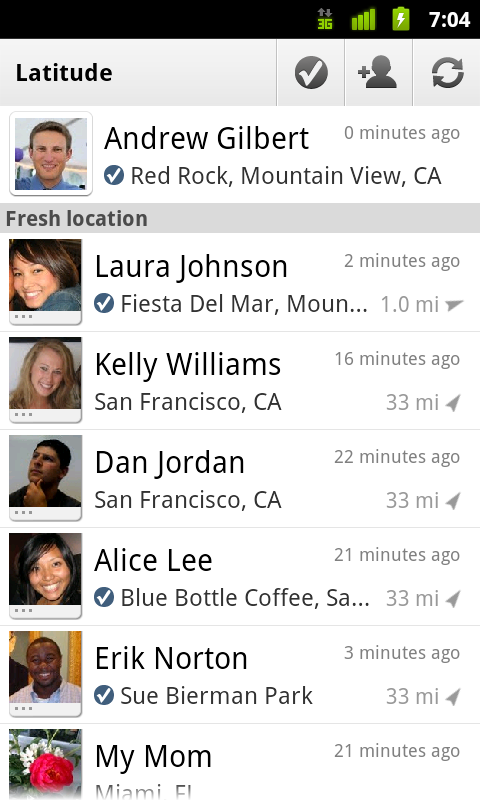
We first introduced Google Latitude to help you stay in touch with your friends and family by making it easy to share where you are. For the 10 million people actively using Latitude each month, this ?where? has been a location on a map. Starting today in Google Maps 5.1 for Android, you can also connect that location to a real place by checking in there using Latitude.

Connecting your location with places
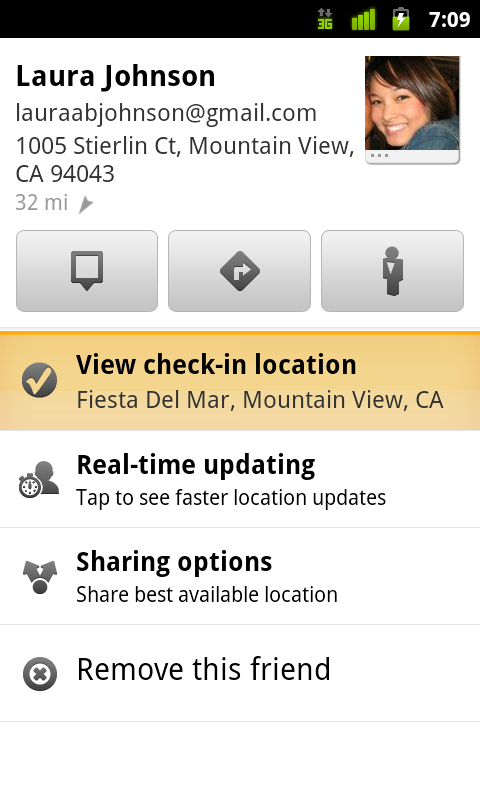
You can still use Latitude to automatically update and share your location, but check-ins let you add context to the location?like captions to a photo. For example, I live in San Francisco but often travel around the world. Until today, sharing my location let friends and family know if I was across the globe or in their neighborhood. Now, check-ins let them see the cool restaurant I?m trying in Taipei or join me for a latte at the cafe nearby.

See where your friends are on a map and where they?re checking in.

Not your typical check-ins
Because you can use Latitude to automatically detect your location, we?ve added a few twists to checking in to make it really easy:
  • Notifications: Turn on check-in notifications in Latitude?s settings and get a notification to check in at a nearby place once you arrive. Never forget to check in again.
  • Automatic check-ins: Choose to automatically check in at specific places you designate, and you?ll be checked in when you?re there. You can talk to friends or finish your bagel without fumbling with your phone.
  • Check out: Once you leave, Latitude knows to automatically check you out of places so friends aren?t left guessing if you?re still there.


Explore your world one check-in at a time
Latitude is built right into Google Maps for Android so check-ins work across Latitude and Maps seamlessly. For example, check in at that new hamburger joint, and you?ll see its Place page with reviews to help you order. When friends check in at a place, you can go straight from their Latitude profile to its Place page to learn about it, fire up Google Maps Navigation (Beta) for turn-by-turn directions to them, and more.

You can also check in at a favorite place to earn special status there; you?ll see if you?ve become a ?Regular,? a ?VIP? or a ?Guru? on its Place page. Keep checking in to hold onto your status or reach the next level.

Latitude check-ins are built right into Google Maps and Place pages.

Of course, we thought carefully about how to make checking in to places quick and easy while giving you control over your privacy. Just like when sharing your location with Latitude, checking in is 100% opt-in, and you can choose to share any check-in with your friends on Latitude, publicly on the web and your Google profile, or just yourself. Learn more about checking in and managing your check-ins with Latitude in the Help Center. Coming later this week, you?ll also be able to see your complete history of check-ins using the optional History tab at google.com/latitude from your computer.

Choose options for individual check-ins or turn on and off notifications in the Latitude settings.

Start checking in by downloading the latest Google Maps from Android Market (on Android 1.6+; tap here if you're on your phone) and then joining Latitude from the main menu. You can check in everywhere Maps and Latitude are already available. If you?re using the new Latitude app for iPhone, you?ll see your friends? check-ins, and we?ll update the app soon so you can check in too.

Just the beginning...
Checking in from Latitude is just one step in helping you connect the places you go with the people you care about. We believe in letting you use or share your location however you like, and we?re working on making location and check-ins useful in more places?across Google and the web.


targeted online advertising |interactive advertising |network marketing |online advertising network |advantages of online advertising |

Tech for good - catching up on Google.org

Google.org continues to ramp up technology projects and test new ideas while Google?s overall charitable giving, in-kind giving and employee volunteering have grown as well. Our newsletter outlines the latest updates to our philanthropic projects. I caught up with Megan Smith, VP New Business Development and General Manager of Google.org, to talk about how Google views philanthropy.

After two years at the helm of Google.org, what are you most optimistic about?
The Internet offers an opportunity to connect in ways never before possible. Things that have historically been far apart are now ?virtually adjacent??most people are a text away, data sets can be mashed up, and all world knowledge is coming online from both expected and surprising sources. Given all of this, I am most excited about all the extraordinary ways people are using the web to connect, be informed, use data and to start solving problems together.

For Google.org specifically, we want to contribute our knowledge and skills to help use technology to address humanity?s greatest challenges. We now have more than 50 engineers and about 40 other cross-functional Googlers working on four or five larger projects?like Google Crisis Response and RE<C?and over a dozen smaller experimental pilot projects.

What kind of project fits this opportunity?
One of our newer projects, Google Earth Engine, takes advantage of Google?s computing infrastructure to create a planetary sciences computation platform that could help reduce negative environmental impact at scale. The first focus is on deforestation monitoring. Earth Engine has just made it through the pilot phase to a full project with its launch last month at climate change talks in Mexico. If we meet our goals to enable global-scale monitoring of changes in the planet?s environment, I believe that Earth Engine could play an important information role in helping to slow deforestation.

What?s the biggest lesson you?ve learned since joining Google.org?
Two things: first, the opportunity we have is great; and second, the work has served as a reminder that creating truly useful, innovative technology is challenging and requires patient iteration, dialog, teamwork and creativity. It takes time to gather new ideas, learn from the right partners, collaborate, pilot those ideas that pass initial assessment and then launch for scale the few projects that meet the criteria for a Google.org product.

Do Google.org projects have a specific focus?
We don?t have a topical focus?we work on technology solutions to many different kinds of global challenges. The key is to take advantage of Google?s strengths. In the area of global health, for example, we have been able to create a global flu monitoring system based on search data. For our environmental work, we were able to leverage our data center computing power to put together the finest-scale forest map of Mexico to date (processing this data would take two years on one computer, but we made it in less than 24 hours using our computing infrastructure).

How does Google.org start and ramp up its technology projects?
We work to tap into the talent at Google. Some projects have come out of hallway conversations and others from extensive talks with partners in the field. Formally, we have a bimonthly new initiatives meeting with senior engineers where talented individuals or teams within Google bring ideas or prototypes. If we think the idea is a match and has promise, we give it budget, headcount, guidance and time to see where it can go during a pilot period. Once we have a live pilot or project, we take advantage of Google.com?s standard project review and management processes that our company has effectively used for years.

What if those pilots fail?
That?s normal. We should expect that some of them will fail or will only have smaller impact. If you?re not failing some of the time, you?re not taking risks. As we progress, some of our failures will hopefully teach us as much as some of our successes.

What other charitable giving does Google do?
As a company that has been doing well, it?s important that we push ourselves to be amongst the most generous companies. We have several charitable giving programs supporting, for example, education (especially K-12 science and math programs), university research, communities where we work, and technology solutions for underserved groups. Last year the company gave more than $145 million to non-profits and academic institutions, and more than $184 million when including Google Grants, Google.org technology projects and in-kind product support for non-profits.

How is this philanthropic work different from that of other companies?
Like other companies, we have charitable giving programs, we provide products in-kind and we have a range of employee volunteering programs. Some companies like ours may also have experiments like Google.org to leverage their strengths?a form of skills-based giving. However, many companies do amazing charitable work through a centralized Corporate Social Responsibility arm that tackles a key issue or two. We approach philanthropy the way we do our core business, with big goals and a ?launch early and iterate? approach. Ideas come from all over the company and we work to tackle a range of issues we care about, from clean energy to education to development. It may not be as clean as the process that some others have, but we think this is how we can have the most impact.

We remain determined, as our founders said when they set the vision for Google.org, "to find original ways to extend our assets, so that we can drive scalable, sustainable efforts. ...the underlying principle: Never stop looking for ways to do the best with what you have."


online business advertising |banner advertising |online advertising course |online advertising plan |online advertising statistics |

Some weekend work that will (hopefully) enable more Egyptians to be heard

Like many people we?ve been glued to the news unfolding in Egypt and thinking of what we could do to help people on the ground. Over the weekend we came up with the idea of a speak-to-tweet service?the ability for anyone to tweet using just a voice connection.

We worked with a small team of engineers from Twitter, Google and SayNow, a company we acquired last week, to make this idea a reality. It?s already live and anyone can tweet by simply leaving a voicemail on one of these international phone numbers (+16504194196 or +390662207294 or +97316199855) and the service will instantly tweet the message using the hashtag #egypt. No Internet connection is required. People can listen to the messages by dialing the same phone numbers or going to twitter.com/speak2tweet.

We hope that this will go some way to helping people in Egypt stay connected at this very difficult time. Our thoughts are with everyone there.

Update Feb 1, 12:47 PM: When possible, we're now detecting the approximate (country-level) geographic origin of each call dialing one of our speak2tweet numbers and attaching a hashtag for that country to each tweet. For example, if a call comes from Switzerland, you'll see #switzerland in the tweet, and if one comes from Egypt you'll see #egypt. For calls when we can't detect the location, we default to an #egypt hashtag.


local online marketing |online advertising strategies |advertising websites |online advertisement |free online business advertising |

Explore museums and great works of art in the Google Art Project

One of the things I love about working at Google is that you can come up with an idea one day and the next day start getting to work to make it a reality. That's what happened with the Art Project?a new tool we're announcing today which puts more than 1,000 works of art at your fingertips, in extraordinary detail.

It started when a small group of us who were passionate about art got together to think about how we might use our technology to help museums make their art more accessible?not just to regular museum-goers or those fortunate to have great galleries on their doorsteps, but to a whole new set of people who might otherwise never get to see the real thing up close.

We're also lucky here to have access to technology like Picasa and App Engine and to have colleagues who love a challenge?like building brand-new technology to enable Street View to go indoors! Thanks to this, and our unique collaboration with museums around the world, we were able to turn our 20% project into something you can try out for yourself today at www.googleartproject.com.

You?ll find a selection of super high-resolution images of famous works of art as well as more than a thousand other images, by more than 400 artists?all in one place. And with Street View technology, you can take a virtual tour inside 17 of the world?s most acclaimed art museums, including The Metropolitan Museum of Art and MoMA in New York, The State Hermitage Museum in St. Petersburg, Tate Britain & The National Gallery in London, Museo Reina Sofia in Madrid, the Uffizi Gallery in Florence and Van Gogh Museum in Amsterdam.

Officer and Laughing Girl, Johannes Vermeer (The Frick Collection, New York - U.S.)

Here are a few things you can do:
  • Dive into brushstroke-level detail: On top of the 1,000+ other images, each of the 17 museums selected one artwork to be photographed in extraordinary detail using super high resolution or ?gigapixel? photo-capturing technology. Each of these images contains around 7 billion pixels?that's that?s around 1,000 times more detailed than your average digital camera?and a specially-built ?microscope view? uses Picasa to deliver these images at amazingly high resolution. You can zoom in to see Van Gogh?s famous brushwork or watch how previously hard to-see elements of an artwork suddenly become clear?such as the tiny Latin couplet which appears in Hans Holbein the Younger?s ?The Merchant Georg Gisze.?

The bedroom, Vincent van Gogh (Van Gogh Museum)
  • Explore inside the museums: the Street View team designed a brand-new vehicle called the ?trolley? to take 360-degree images of the interior of selected galleries. These were then stitched together and mapped to their location, enabling smooth navigation of more than 385 rooms within the museums. We also created a new clickable annotation feature, so you can jump from being inside a museum one moment to viewing a particular artwork the next. Once inside an image, an info panel lets you read more about an artwork, find more works by that artist and watch related YouTube videos. Gallery interiors can also be explored directly from within Street View in Google Maps.

Uffizi Gallery in Florence, Italy?with a view on Botticelli?s ?The Birth of Venus?
  • Create your own collection: With the ?Create an Artwork Collection? feature, you can save specific views of any of the artworks and build your own personalized collection. Comments can be added to each painting and the whole collection can then be shared with friends, family or on the web using the integrated goo.gl URL shortener.
We?re incredibly excited about this project?it?s our first step toward making great art more accessible, and we hope to add more museums and works of art in time. So whether you?re a student, an aspiring artist or a casual museum-goer, we hope the Google Art Project gives you a fun and unusual way to interact with art?and hopefully inspires you to visit the real thing.


online affiliate marketing |online banner advertising |online advertising rate card |online advertising terms |online advertising course |

Microsoft’s Bing uses Google search results—and denies it

By now, you may have read Danny Sullivan?s recent post: ?Google: Bing is Cheating, Copying Our Search Results? and heard Microsoft?s response, ?We do not copy Google's results.? However you define copying, the bottom line is, these Bing results came directly from Google.

I?d like to give you some background and details of our experiments that lead us to understand just how Bing is using Google web search results.

It all started with tarsorrhaphy. Really. As it happens, tarsorrhaphy is a rare surgical procedure on eyelids. And in the summer of 2010, we were looking at the search results for an unusual misspelled query [torsorophy]. Google returned the correct spelling?tarsorrhaphy?along with results for the corrected query. At that time, Bing had no results for the misspelling. Later in the summer, Bing started returning our first result to their users without offering the spell correction (see screenshots below). This was very strange. How could they return our first result to their users without the correct spelling? Had they known the correct spelling, they could have returned several more relevant results for the corrected query.


This example opened our eyes, and over the next few months we noticed that URLs from Google search results would later appear in Bing with increasing frequency for all kinds of queries: popular queries, rare or unusual queries and misspelled queries. Even search results that we would consider mistakes of our algorithms started showing up on Bing.

We couldn?t shake the feeling that something was going on, and our suspicions became much stronger in late October 2010 when we noticed a significant increase in how often Google?s top search result appeared at the top of Bing?s ranking for a variety of queries. This statistical pattern was too striking to ignore. To test our hypothesis, we needed an experiment to determine whether Microsoft was really using Google?s search results in Bing?s ranking.

We created about 100 ?synthetic queries??queries that you would never expect a user to type, such as [hiybbprqag]. As a one-time experiment, for each synthetic query we inserted as Google?s top result a unique (real) webpage which had nothing to do with the query. Below is an example:


To be clear, the synthetic query had no relationship with the inserted result we chose?the query didn?t appear on the webpage, and there were no links to the webpage with that query phrase. In other words, there was absolutely no reason for any search engine to return that webpage for that synthetic query. You can think of the synthetic queries with inserted results as the search engine equivalent of marked bills in a bank.

We gave 20 of our engineers laptops with a fresh install of Microsoft Windows running Internet Explorer 8 with Bing Toolbar installed. As part of the install process, we opted in to the ?Suggested Sites? feature of IE8, and we accepted the default options for the Bing Toolbar.

We asked these engineers to enter the synthetic queries into the search box on the Google home page, and click on the results, i.e., the results we inserted. We were surprised that within a couple weeks of starting this experiment, our inserted results started appearing in Bing. Below is an example: a search for [hiybbprqag] on Bing returned a page about seating at a theater in Los Angeles. As far as we know, the only connection between the query and result is Google?s result page (shown above).


We saw this happen for multiple queries. For the query [delhipublicschool40 chdjob] we inserted a search result for a credit union:


The same credit union soon showed up on Bing for that query:


For the query [juegosdeben1ogrande] we inserted a page of hip hop bling jewelry:


And the same hip hop bling page showed up in Bing:


As we see it, this experiment confirms our suspicion that Bing is using some combination of:
  • Internet Explorer 8, which can send data to Microsoft via its Suggested Sites feature
  • the Bing Toolbar, which can send data via Microsoft?s Customer Experience Improvement Program
or possibly some other means to send data to Bing on what people search for on Google and the Google search results they click. Those results from Google are then more likely to show up on Bing. Put another way, some Bing results increasingly look like an incomplete, stale version of Google results?a cheap imitation.

At Google we strongly believe in innovation and are proud of our search quality. We?ve invested thousands of person-years into developing our search algorithms because we want our users to get the right answer every time they search, and that?s not easy. We look forward to competing with genuinely new search algorithms out there?algorithms built on core innovation, and not on recycled search results from a competitor. So to all the users out there looking for the most authentic, relevant search results, we encourage you to come directly to Google. And to those who have asked what we want out of all this, the answer is simple: we'd like for this practice to stop.


online advertising plan |local advertising |buy online advertising |online classified ads |online advertisement |